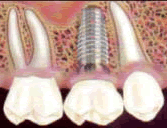
A dental implant is an artificial tooth root that is surgically
anchored into your jaw
An implant retained denture or tooth provides greater stability
improved biting and chewing forces and more satisfaction
for wearer than a conventional denture or crown..
Why Implants
They don't rely on neighboring teeth for support.
They are permanent and stable.
Because the implant is secured within the jawbone, the replacement teeth look, feel, and function just like your own natural teeth.
Improved appearance. Dental implants look and feel like your own teeth. And because they are designed to fuse with bone, they become permanent.
Improved speech. With poor-fitting dentures, the teeth can slip within the mouth causing you to mumble or slur your words. Dental implants allow you to speak without the worry that your teeth might slip.
Improved comfort. Because they become part of you, implants eliminate the discomfort of removable dentures.
Easier eating. Sliding dentures can make chewing difficult. Dental implants function like your own teeth, allowing you to eat your favorite foods with confidence and without pain.
Improved self-esteem. Dental implants can give you back your smile, and help you feel better about yourself.
Improved oral health. Dental implants don't require reducing (drilling) other teeth, as a tooth-supported bridge does. Individual implants also allow easier access between teeth, improving oral hygiene.
Durability. Implants are very durable.
Implants are usually made of titanium metal that is compatible with body tissue. They require the same care as real teeth, including brushing, flossing, and regular dental check-ups. With good care, many implants last a lifetime.
Convenience. Dental implants eliminate the embarrassing inconvenience of removing your dentures, as well as the need for messy adhesives to keep your dentures in place.
The success rate for implants depends on the tooth's purpose and location in the mouth. The success rate is about 95 percent for those placed in the front of the lower jaw and 85 percent for those placed in the sides and rear of the upper jaw.
Talk with us about whether you are an implant candidate. You must be in good health and have the proper bone structure and healthy gums for the implant to stay in place.
If you suffer from certain problems, such as radiation therapy to the head/neck area, are a heavy smoker or drinker, or have certain systemic diseases (such as diabetes), the success rate for implants decreases dramatically and needs to be evaluated on an individual basis.
Your overall health may affect the success rate of dental implants. Poor oral hygiene is a big reason why some implants fail. It is important to floss and brush around the fixtures at least twice a day, without metal objects. Your dentist will give you specific instructions on how to care for your new implants. Additional cleanings of up to four times per year may be necessary to ensure that you retain healthy gums
Placement of dental implants is a minor surgical procedure performed in one or two office visits.
Development of an individualized treatment plan. The plan addresses your specific needs and provides coordinated care based on the implant option that is best for you.
The tooth root implant, which is a small post made of titanium, is placed into the bone socket of the missing tooth.
As the jawbone heals, it grows around the implanted metal post, anchoring it securely in the jaw. The healing process can take from 3 to 5 months.
When the implant has bonded to the jawbone, a small connector post – called an abutment – is attached to the post to securely hold the new tooth. To make your new tooth or teeth, your dentist makes impressions of your teeth, and creates a model of your bite. Your new tooth or teeth are based on this model. It will match the color of your natural teeth
A replacement tooth, called a crown, is then attached to the abutment.